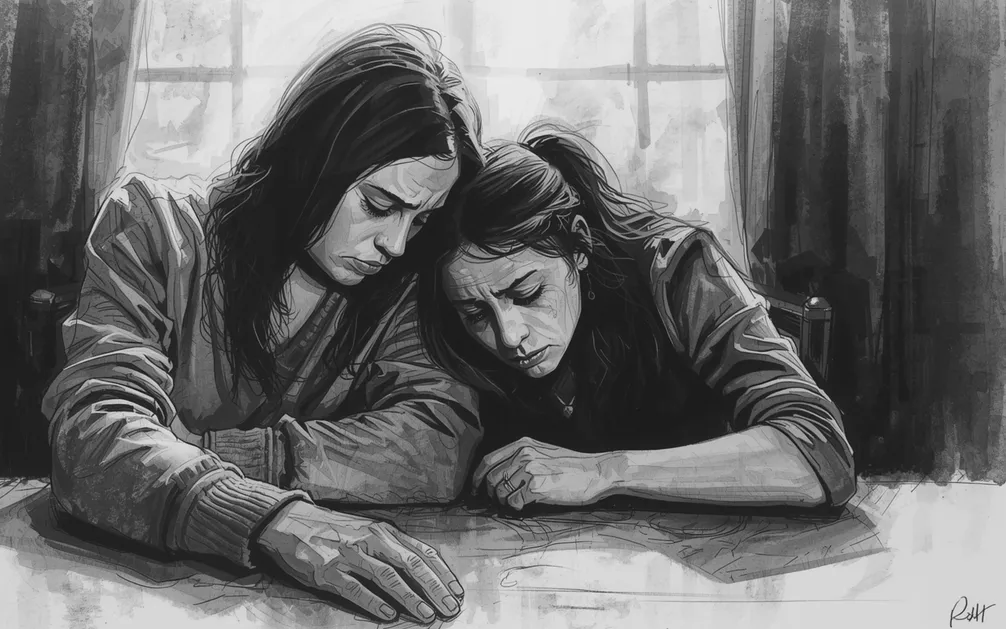
A woman I know in the Polish countryside was trying to light the fire in her stove to heat the house for guests. Her mother, watching from the doorway, suggested a specific technique. The daughter said she could handle it on her own. The mother replied, “I could get better help from a stranger than from my own daughter.” This was not a joke. It was not said with a wink. It was a weapon—a small, precise grenade of guilt lobbed across the kitchen to punish a daughter for the crime of independence. I have heard variations of this story from nearly every Polish woman I have met whose mother is over sixty. The details change. The dynamic does not. The aging Polish mother, having lost her husband to death or divorce, turns to her daughter not for companionship but for control—and the daughter, caught between filial duty and personal survival, does not know how to fight back.

Another woman I know has a widowed mother who is terrified of being alone at night. She calls her daughter constantly, complains that she does not visit enough, and deploys the kind of passive-aggressive language that would make an American therapist reach for a diagnostic manual. “You just want me to die alone.” “I suppose my feelings don’t matter to you.” “Your father would never have left me like this.” The daughter is not neglectful. She visits regularly, calls daily, and manages her mother’s finances. But she will not move in. She will not surrender her apartment, her career, and her social life to become a full-time companion for a woman who is not ill but lonely—and who interprets her daughter’s refusal to sacrifice everything as proof of abandonment. The guilt is relentless. The expectation is absolute. And the daughter, like so many Polish daughters in her position, oscillates between rage and despair.

This post is for paying subscribers only

Sign up now and upgrade your account to read the post and get access to the full library of posts for paying subscribers only.

Sign up now Already have an account? Sign in