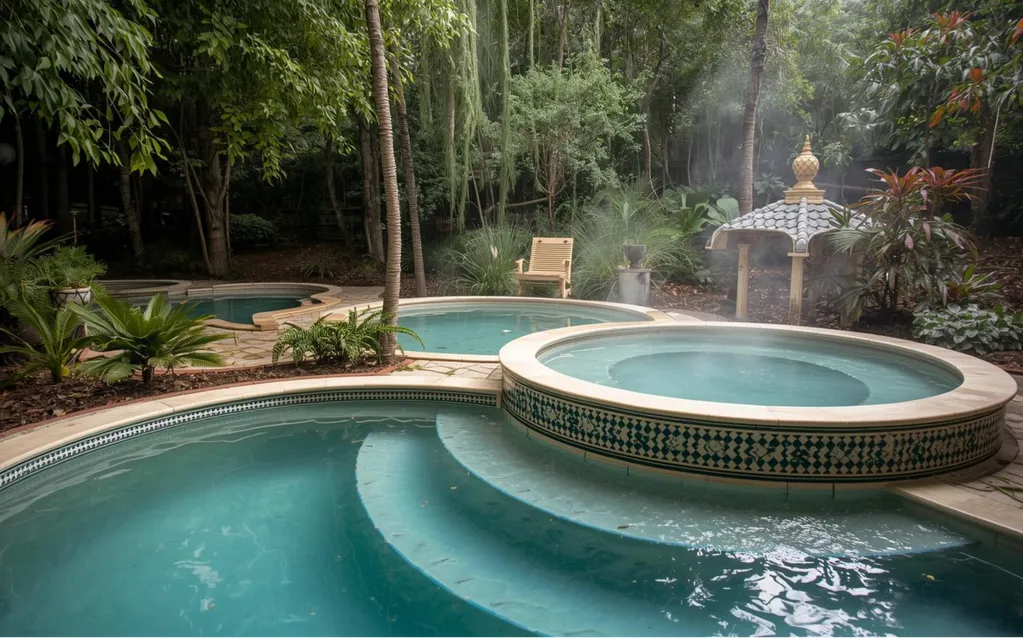
There are more than one hundred and twenty natural hot springs beneath the city of Budapest, producing seventy million liters of thermal water every day at temperatures ranging from seventy to one hundred and seventy degrees Fahrenheit. The Romans built bathhouses here two thousand years ago. The Ottomans, during their hundred-and-fifty-year occupation beginning in the sixteenth century, constructed the elegant domed hammams that still operate today—Rudas, Király, Veli Bej—octagonal pools beneath vaulted ceilings pierced with small circles of glass that scatter light across the steam. Budapest is called the City of Spas not as a marketing slogan but as a geological fact. The water comes from the earth, and the people go to it—not occasionally, not as a luxury, but as a matter of routine, the way Americans go to a coffee shop or a sports bar.

Five thousand miles east, Japan has sustained a parallel tradition for more than thirteen hundred years. The onsen—natural hot spring baths scattered across the volcanic archipelago—are woven so deeply into Japanese life that they carry an almost spiritual weight. The culture developed around three principles: purification, respect, and community. Bathing in Japan is not hygiene. It is ritual. Men and women enter the water together or in separate pools, hierarchy dissolves, strangers become companions, and the shared silence of immersion in hot water produces a particular kind of intimacy that no conversation could achieve on its own. Hungary and Japan are separated by geography, language, and nearly everything else. What they share is an understanding that water heals—and that healing is best done in company.

This post is for subscribers only

Sign up now to read the post and get access to the full library of posts for subscribers only.

Sign up now Already have an account? Sign in