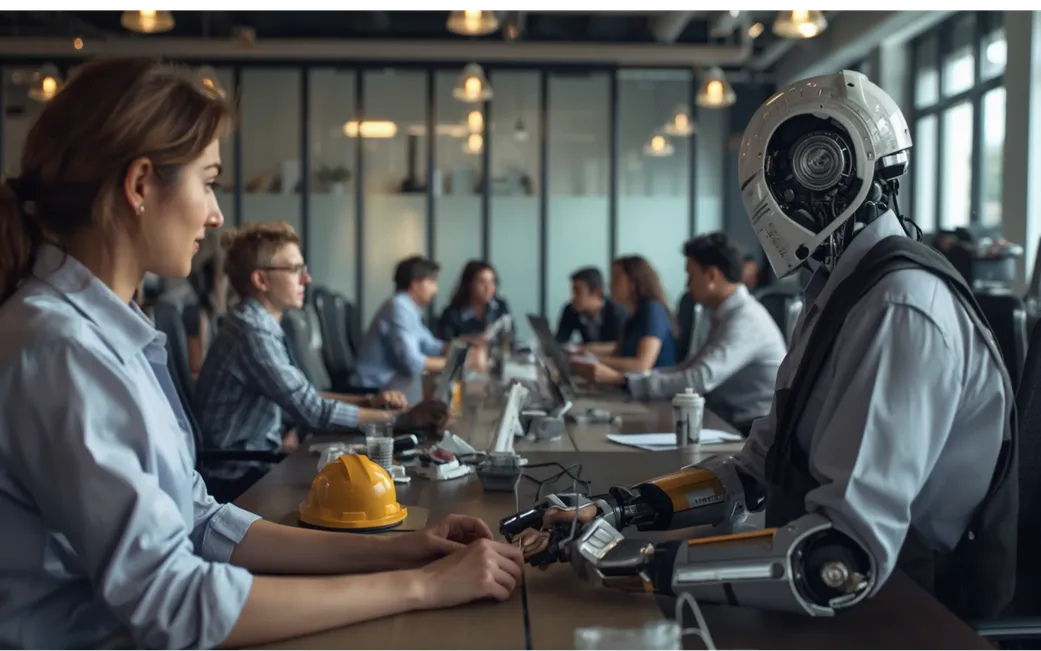
The economic order that governed the Western world for the past seventy-five years is being dismantled in real time, and most people have not yet noticed. The traditional model—live near the office, commute to a building, perform knowledge work in physical proximity to other knowledge workers—is not merely changing. It is disappearing. Artificial intelligence has made it possible for a single person with the right tools to produce what once required a department of ten. Nearly fifty percent of all jobs can now use AI for at least a quarter of their tasks. Between January and June of 2025, companies reported almost eighty thousand tech job cuts directly linked to AI adoption, and modeling estimates suggest the real number is closer to three hundred thousand. Entry-level white-collar postings have declined thirty-five percent since 2023. The CEO of Anthropic, one of the leading AI companies, has stated publicly that AI could eliminate half of all white-collar entry-level positions within five years. This is not a forecast for the distant future. It is a description of what is already happening.

The people who work with their hands—builders, electricians, plumbers, welders, the men who pour concrete and lay pipe and wire buildings—will continue to be in demand. No machine can replicate the physical judgment required to frame a house or repair a sewer line in a space that was not designed for a robot. Infrastructure does not build itself. But the people who work in the realm of ideas—the middle managers, the analysts, the marketers, the paralegals, the consultants who produce reports no one reads—are being measured against a machine that works faster, costs less, and never calls in sick. Those who cannot outperform the machine will be replaced by it. This is not cruelty. It is arithmetic.

This post is for paying subscribers only

Sign up now and upgrade your account to read the post and get access to the full library of posts for paying subscribers only.

Sign up now Already have an account? Sign in