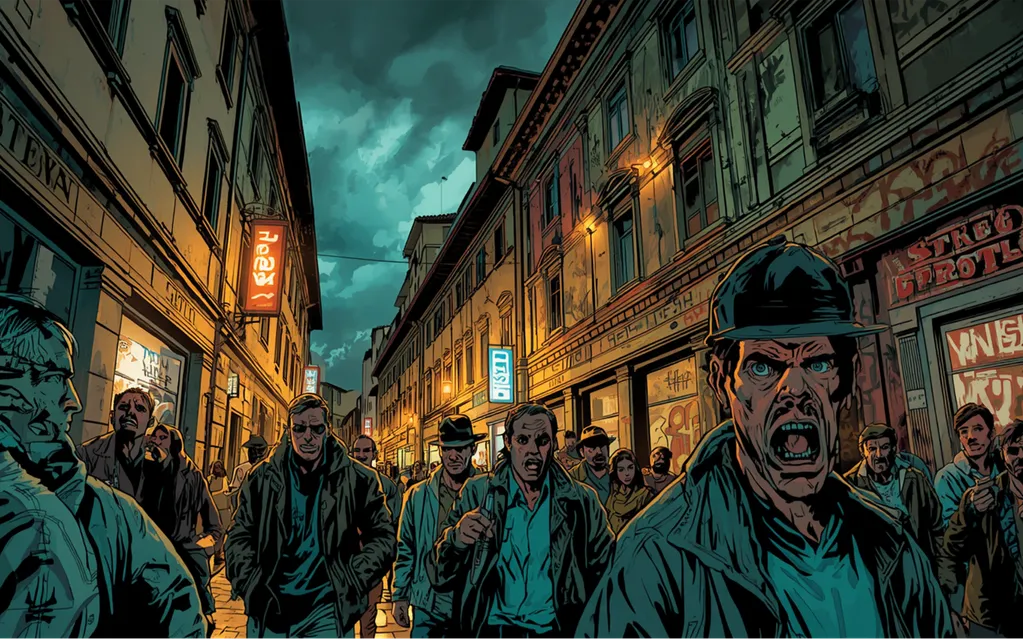
I was standing in a small boutique in Cefalù, a medieval fishing village on the northern coast of Sicily, when the young woman behind the counter told me her story. She had left Sicily years earlier to attend university in Florence—the birthplace of the Renaissance, the crown jewel of Western civilization. She had stayed on after graduation to begin her career. And then she came home. I asked her why. She said she no longer felt safe. She could not go out at night. She could not wear a bikini at the beach without being harassed. She described being grabbed by men on the beach, nearly robbed on the street, and having bottles thrown at her as she walked home after dark. She could not go out with her girlfriends without constant fear. I asked her who these men were. She hesitated. I answered for her: “North African and Arab immigrants.” She nodded. In Cefalù, she told me, she walks the streets alone at any hour, enjoys the nightlife with her friends, and goes to the beach unmolested. The difference between the two cities, she said, is night and day. She is not the first Italian to tell me this. She will not be the last.

The statistics confirm what this young woman experienced. In the first seven months of 2025, Italian government data showed that forty-two percent of people stopped by police in designated urban “red zones” were foreigners—despite foreigners comprising only nine percent of Italy’s population. Seventy-six percent of those subjected to enforcement actions were foreign nationals. For predatory crimes—muggings, robberies, and street assaults—more than sixty percent of those arrested were foreigners. As of early 2026, foreign citizens accounted for nearly a third of Italy’s prison population, roughly nineteen thousand eight hundred inmates out of sixty-two thousand seven hundred. In February, a North African migrant was arrested for the beheading of a German woman in Scandicci, a suburb of Florence. In July 2026, Italian prosecutors quietly stopped naming suspects’ nationalities in official statements—not because the problem had been solved, but because the pattern had become too embarrassing to acknowledge publicly. The Italian government’s response to its own data has been to hide it.

This post is for paying subscribers only

Sign up now and upgrade your account to read the post and get access to the full library of posts for paying subscribers only.

Sign up now Already have an account? Sign in